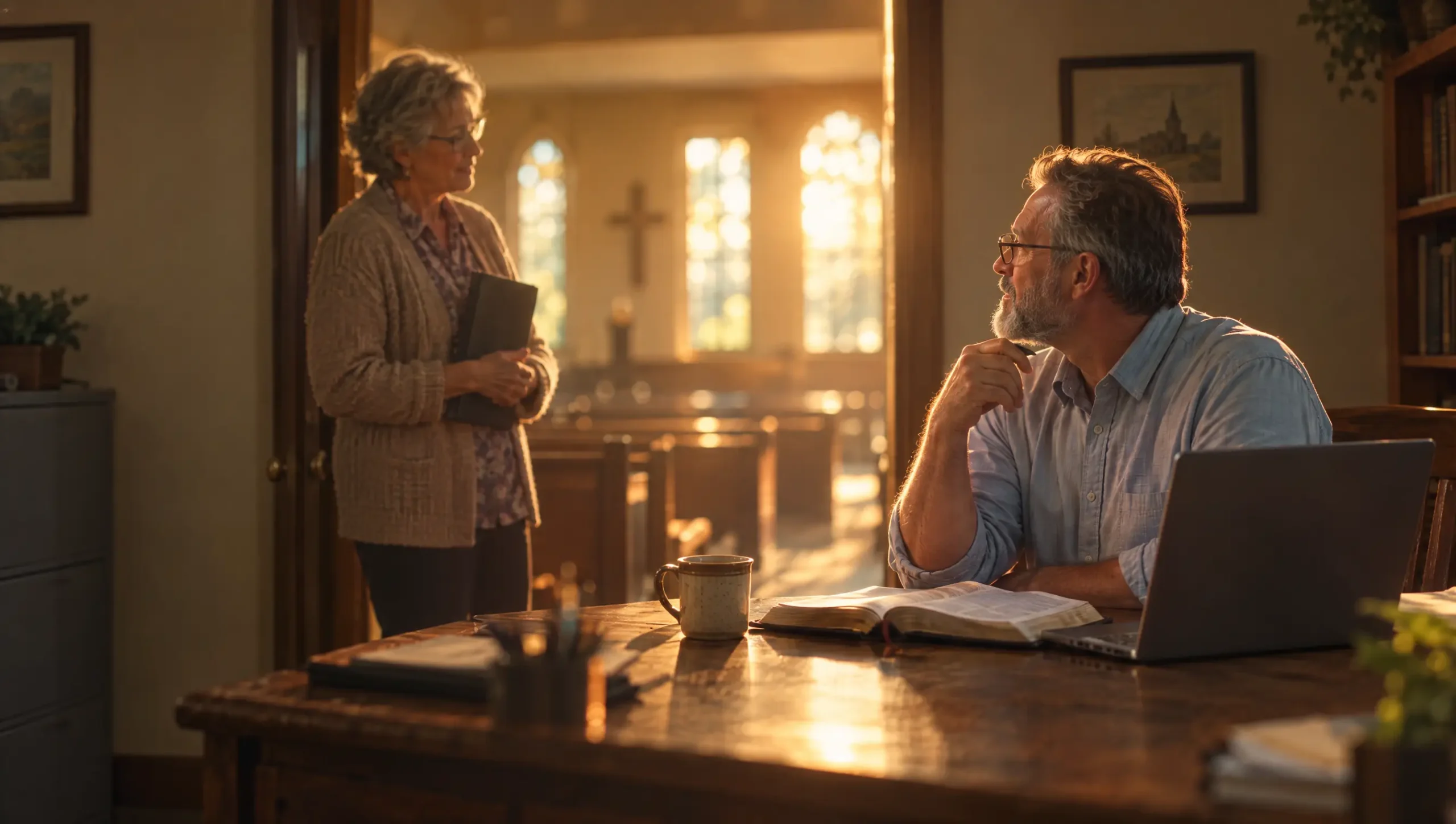
Ask the pastor of a 90-person church about their tech team and you hear some version of the same answer: “Me, my laptop and a retired volunteer who comes in on Thursdays.”
That is most churches in America. The typical congregation is small. The staff is a pastor, sometimes a part-time admin and a group of volunteers who already give more hours than anyone asks.
So when someone says “your church should use AI,” the honest question back is: who is going to run it?
Here is the answer. You do not need a tech team. You need to pick the right first job for AI and keep everything else human.
Start with the job nobody has time for
Small churches do not lose guests because they lack care. They lose guests because nobody is free to answer the phone on Saturday, reply to the website message on Tuesday night or text the family who visited last week.
That is the first job to hand to AI. Not the sermon. Not pastoral care. The repetitive questions and the follow-up that slip through when two people do the work of ten.
What time is the service? Is there something for my kids? What should I wear? Where do I park? A small church answers those questions dozens of times a month. An AI assistant answers them in under 60 seconds at any hour, and it never gets tired of the parking question.
What “no tech team” looks like in practice
Here is how a small church goes live on Digital Pastor without hiring anyone.
You bring what you already know. Service times, ministries, beliefs, kids and student programs, location and who on staff handles what.
We do the setup. We train your AI assistant on that information and your existing website, then turn on the guest follow-up sequences in Automations.
You test it before anyone else sees it. Ask it the questions your guests ask. Flag anything that does not sound like your church. Then it goes live, usually in under a week.
After that, it runs. Your part is reading the guest summaries and making the human calls the system reminds you to make.
Where AI stops and people start
Small churches worry that AI will make them sound like a corporation. That worry is fair. The fix is drawing a clear line.
The AI answers logistics. It captures guest information. It sends the first thank-you text and reminds you on day three to make a personal call.
People handle everything pastoral. A prayer request, a hospital visit, a question about faith, a family in crisis: those route to you, not to an automated reply. The AI is the front desk. You are still the pastor.
What it costs
Digital Pastor Starter is $149 a month. It includes the AI assistant, the core follow-up system, a template church website and room for up to 1,000 contacts.
If you are already paying separately for a website, an email tool and a contact database, add those up. Many small churches spend close to that much on tools that do not talk to each other. Starter replaces them with one login and one guest record.
There is no long-term contract. If it does not earn its place, you cancel. Plans and annual savings are on the pricing page.
Your first step this week
Write down the five questions guests ask most often and how long it takes your church to answer each one today. If any answer is “whenever someone gets to it,” that is your starting point.
Then book a demo and bring your list. We will walk through how each of those five questions gets answered and handed to your team.
